
Community Blogs
Siila: What the Word Means, and Why We Took It

Aymar de Gunzburg
5/25/26, 10:22 AM

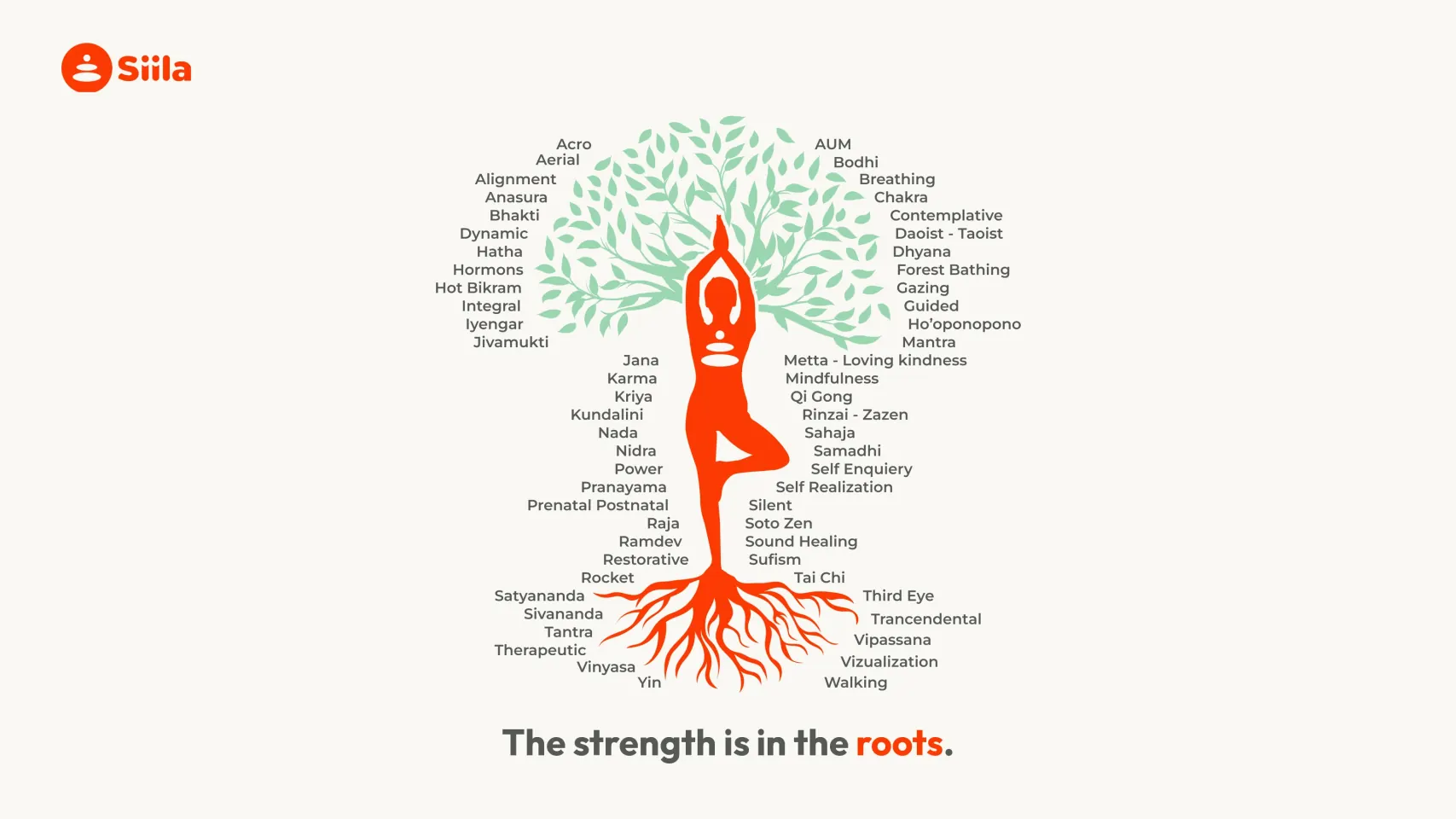
It is in the roots, not the branches, that a tree's greatest strength lies, and this is equally true for humankind. As much as we have evolved, we find our strengths embedded in our roots.
Often we find our lives on the brink of chaos, the mind meandering through the unknown, and we end up thinking things were better before. Siila is one such virtue that stems from our roots. It is an ancient concept, a moral compass for mining into our inner self and guiding our actions. The word goes back some 2,500 years, to ways of life far older than anything we have built since, and it has not dated.
Siila, in simple words, means moral discipline. In Buddhism it is one of three trainings, alongside samadhi, collectedness, and panna, wisdom. Of the eight factors of the Noble Eightfold Path, three belong to siila: right speech, right action and right livelihood. It is also the foundation of the non-sectarian Vipassana movement.
The five precepts, and the myth that they are only for monks
The Buddha set out five precepts for lay practitioners, asking everyone to refrain from taking life, from taking what is not given, from sexual misconduct, from incorrect speech, and from intoxicating drinks and drugs that lead to carelessness.
These are mistakenly perceived as possible only for monks, impractical for ordinary people in ordinary lives. On the contrary, they are quite simple. They preach nothing more than to act appropriately.
And they are not the property of Buddhism. Four of the five were already in circulation before it: prohibitions in older Indian practice, adopted across several traditions around the sixth century BCE. The Chandogya Upanishad carries four principles that match them almost exactly. Anyone who has studied yoga has met the same list under different names, in Patanjali's five yamas: ahimsa, satya, asteya, brahmacharya, aparigraha. Judaism and Christianity say do not murder, do not steal, do not commit adultery, do not bear false witness. The theology differs enormously from one tradition to the next. The guidance on how to treat the person in front of you keeps converging.
Only the fifth, on intoxicants, was new in Buddhism. And it is framed differently from the other four. They protect somebody else: a life, a possession, a marriage, the truth. The fifth protects your own attention, on the understanding that everything else gets harder once that goes.
These are not antique problems
Our world is struggling with a myriad of problems that make our lives stressful. It is changing dynamically, and keeping the peace is only one of many things we are asked to hold. Life is more demanding than it was. Wellbeing, peace and security are threatened by increasing chaos, disorder and greed.
So the five precepts are as relevant now as they were then, and some of them have grown teeth they did not have before. Right speech was once about what you said to the people in the room; it is now about what you publish to strangers, at speed, when provoked. Taking what is not given once meant a neighbour's property; it now includes someone's work, someone's credit, someone's attention. The precept on carelessness was written about drink, but it was never really about the substance, and this century has built an industry out of taking the thing it was protecting.
Right speech. Right action. Right livelihood.
This is what Siila is about.
It is about leading a conscious life, about being mindful of our actions. It is about being honest within ourselves and within our relationships. And in order to be mindful and honest, it helps to live with disciplined moral conduct.
Siila is also interpreted as samadhana, which means harmony or coordination. That reading is not a modern gloss. In the Visuddhimagga, the fifth-century manual of practice, Buddhaghosa asks in what sense siila is virtue and answers twice over: samadhana, a coordinating, so that what we do and what we say stop contradicting each other, and upadharana, an upholding, a foundation for everything built on top of it.
Coordination, then. Not purity, not perfection. Just a person whose words and actions have come into line. Following these precepts can help create a world with more security, peace and wellbeing, and it is a standard anyone can work toward, inside any faith or none.
Religions across the world are founded on common principles of love, care and mutual respect. Moral conduct has been taught by leaders across every culture and belief. So it is no surprise to see a continuous surge in seekers from diverse cultures finding common ground in the practice of meditation, and with it a rise in teachers and practitioners offering different techniques across the globe. What they share is the understanding that meditation is not a result but an unending journey, a tool for meeting suffering wisely rather than escaping it.
Why we built Siila
With an aim to bring the best of these virtues, practices and techniques to everyone, we built Siila, a global platform for the meditative universe. Founded by Aymar de Gunzburg, Siila is a social force powered by our collected enlightenments. It brings seekers, professionals and practitioners into one interactive space, in service of individual awakening and consciousness.
It gathers the parts of this world that rarely sit on the same page: religious leaders and philosophies, indigenous and tribal practitioners, networks of teachers, meditation centres, yogic communities, organisations and NGOs.
In practice, it cuts the time between wanting to begin and finding someone real to begin with. Learn from thousands of techniques. Reach teachers and spiritual leaders across the globe. Follow events, sitting groups and centres, and book a class, all in one place. Our first community is in Lisbon, and it is growing outward from there.
Naming the company after siila means we can be measured against it. That is the point of choosing it.
Where it starts
"If a priest should frame a wish as follows: 'Let me travel cross-legged through the air like a winged bird,' then must he be perfect in the precepts, bring his thoughts to a state of quiescence, practise diligently the trances, attain to insight, and be frequenter to lonely places."
Akankheyya Sutta, Majjhima Nikaya, in Henry Clarke Warren's Buddhism in Translations, 1896.
Read past the winged bird and it is an order of operations. Whatever you are reaching for, however lofty, conduct comes first. Everything else is built on it.
The extent to which any of us can follow the five precepts will depend on many things. But adopting them even with limitations will go a long way toward making our world a better place. Because there is indeed no greater wealth in this world than peace of mind.
We wish everyone to be wealthy with abundant peace.
May peace be with you.

1/8/21, 12:04 PM
Nice Blog
1/8/21, 7:24 AM
Test

Aymar de Gunzburg
2/1/21, 12:32 PM
Yes really nice blog!