
Community Blogs
Japa Mala: What the 108 Beads Are For
Sumedha Panwar
6/27/26, 10:22 AM

Teachers and sages are often pictured holding a garland of beads. Mala, from the Sanskrit माला, means garland. It is a simple and effective tool for counting mantras, prayers or intentions, and the point of it is subtler than counting.
If part of your mind is occupied with keeping count, that part is not available for the mantra. The beads take the counting away. What is left is free to rest on the sound, or the meaning, or neither.
What a japa mala actually is
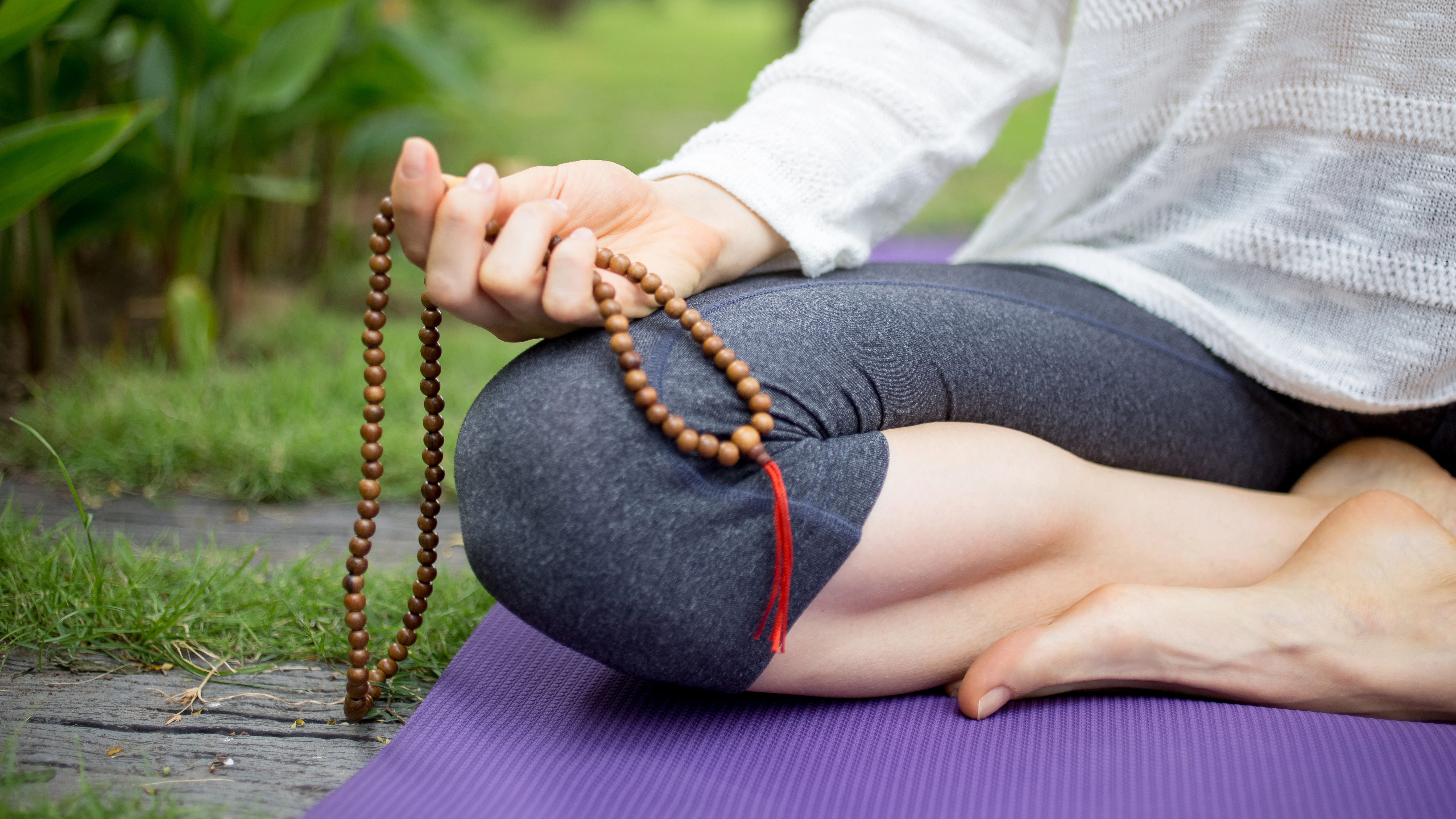
A japa mala is a garland of 108 beads, with one larger bead, often with a tassel, that marks where the circle begins and ends. That extra bead is the guru or meru bead. It is not counted. When your fingers reach it, you either stop or turn back the way you came, rather than crossing over it.
Why 108
Nobody can tell you definitively, and anyone who says otherwise is guessing with confidence.
The explanations that have survived are several and they do not agree. Traditional Buddhist thought holds that a person carries 108 afflictions, the kleshas. Others count 108 dharmas, or phenomena. In East Asian Buddhism it can stand for 108 meditations, or the 108 deities of the Diamond Realm mandala.
What is remarkable is not which explanation is right. It is that across many centuries, many languages and several religions that disagree about almost everything else, the number itself has stayed the same.
Where it came from, and what we do not know
The honest history is more interesting than the tidy one.
The origin of the mala is not known. Counting with beads and pebbles was widespread in the ancient world. An Indian origin is likely: no Chinese literature mentions malas before Buddhism arrived during the Han dynasty. But malas do not appear in the earliest Buddhist texts, the Agamas and the Pali Nikayas, so whether Buddhists, Brahmins, Jains or someone else used them first is genuinely unsettled.
They may appear in early Hindu art, though a mala is hard to distinguish from an ordinary necklace in a sculpture. The earliest clear depiction of a mala being used for recitation is a bodhisattva image from the Northern Wei dynasty in China, between the fourth and sixth centuries CE, with the beads held in the hand. The first literary reference to reciting with one appears in the Mu Huanzi Jing. Daochuo, who lived from 562 to 645, was the first Chinese Buddhist writer to promote the practice, and images of monks holding malas appear in China in the seventh century.
So: old, Indian in all likelihood, and documented from the middle of the first millennium onward. Not a precise date, and we would rather say that than invent one.
What they are made of, and one thing almost everyone gets wrong
Traditional malas are wood, seed, stone, bone or metal, strung on cotton, silk or hair. Rudraksha seeds are sacred to Shaivites. Tulsi wood is revered by Vaishnavites.
And then there is the bodhi seed mala, which is extremely popular among Mahayana Buddhists and is not made from the bodhi tree. Those beads come from various palm and legume species. The Tibetan “moon and stars” bead, made from rattan seed, is routinely sold as lotus seed or lotus root, and has nothing to do with the lotus either.
None of which makes those malas less worth owning. It does mean that if a shop tells you a bead came from the tree the Buddha sat under, it did not.
Five faiths, five strings of beads
Counting prayers on a cord is close to a human universal.
Hinduism and Buddhism use the 108-bead mala described above, in tulsi, rudraksha and seed.
Christianity began counting prayers early. Desert monks in the third century counted psalms with pebbles, and by the fourth century knotted prayer ropes were in use. The rosary as it is recognised today took much longer to settle: the Hail Mary reached its current wording around 1514, and Pope Pius V fixed the fifteen mysteries in 1569. The familiar five-decade rosary has 59 beads.
Sikhism uses the mala for repeating the name of the Lord, Waheguru or Satnam, keeping count of recitations and building concentration.
Islam uses the misbaha, also called sibha or tespih: 99 beads with one elongated terminal bead, often wood or date pits. It is frequently suggested that the practice reached Islam through Indian and Buddhist contact, though the transmission is not firmly established and is better described as likely than proven.
The theology in each case is entirely different. The hand doing the counting is the same.
Beads that were never religious at all
Not every string of beads is a prayer.
In Greece and Cyprus, the komboloi, or worry beads, carry no religious meaning. They descend from monastic prayer ropes but are now simply held, turned and clicked, to pass time and occupy the hands.
Among the Zulu, beadwork has long carried meaning rather than counted it. Colour and pattern were read as messages, with particular pieces functioning as letters between people.
What these share with the mala is the oldest insight in the practice: the hands want something to do, and giving them something simple frees the rest of you.
What the beads actually do for your attention
Here is where we are going to be more careful than most articles on this subject.
Japa, the rhythmic repetition of a mantra, gives a busy mind a single thing to return to. For people who find their attention scattering the moment they sit still, having something to hold and move is often the difference between a practice that continues and one that stops in week two. That much is observable, and it is the real case for the mala.
What we are not going to tell you is that mala beads lower your blood pressure or increase your brain activity. We looked for solid evidence specific to mala practice and did not find it. The broader meditation research is more modest than the wellbeing industry suggests: the largest review of the field, published in JAMA Internal Medicine in 2014, found small improvements in anxiety, depression and pain, and in 53 comparisons with active treatments such as exercise and therapy, meditation came out ahead twice.
That is a real effect, honestly stated. A mala is a tool that makes a practice easier to keep. Keeping it is where any benefit comes from.
How to practise, step by step
You need no prior experience.
- Sit somewhere quiet, in a position you can hold comfortably. Comfort matters more than correctness.
- Hold the mala between your thumb and middle finger. Tradition avoids the index finger, which is associated with the ego.
- Choose a mantra you have some relationship with. Move one bead at a time, reciting once per bead.
- Let your attention rest on the breath and the sound.
- Aloud or silent, both work. Aloud is often easier at the start.
- At the guru bead, stop or turn back. Do not cross it.
Your thoughts will wander. That is not a failure, it is the practice: noticing and returning is the exercise, not a sign you are doing it wrong. Go slowly enough to stay interested. Boredom and fatigue end more practices than difficulty does.
Meditation asks for persistence more than talent. Practise consistently, and let the beads carry the counting.
May peace be with you.
PORTUGUÊS
Japa Mala: Para Que Servem as 108 Contas
Professores e sábios aparecem muitas vezes retratados com um colar de contas na mão. Mala, do sânscrito माला, quer dizer guirlanda. É um instrumento simples e eficaz para contar mantras, orações ou intenções, e a sua função é mais subtil do que contar.
Se uma parte da mente está ocupada a manter a contagem, essa parte não está disponível para o mantra. As contas tiram-lhe a contagem das mãos. O que sobra fica livre para pousar no som, ou no sentido, ou em nenhum dos dois.
O que é, afinal, um japa mala
Um japa mala é uma guirlanda de 108 contas, com uma conta maior, muitas vezes com uma borla, que marca onde o círculo começa e acaba. É a conta do guru, ou meru. Não se conta. Quando os dedos lá chegam, ou se pára ou se volta para trás pelo mesmo caminho, em vez de a atravessar.
Porquê 108
Ninguém lho pode dizer com certeza, e quem disser o contrário está a adivinhar com confiança.
As explicações que sobreviveram são várias e não concordam entre si. O pensamento budista tradicional sustenta que cada pessoa carrega 108 aflições, os kleshas. Outros contam 108 dharmas, ou fenómenos. No budismo do Leste asiático pode representar 108 meditações, ou as 108 divindades da mandala do Reino do Diamante.
O notável não é saber qual delas está certa. É que, ao longo de muitos séculos, em várias línguas e em religiões que discordam de quase tudo o resto, o número se tenha mantido o mesmo.
De onde veio, e o que não sabemos
A história honesta é mais interessante do que a arrumada.
A origem do mala não é conhecida. Contar com contas e pedras era prática comum no mundo antigo. Uma origem indiana é provável: não há literatura chinesa que mencione malas antes de o budismo chegar, durante a dinastia Han. Mas os malas não aparecem nos textos budistas mais antigos, os Agamas e os Nikayas em páli, por isso não está resolvido se foram budistas, brâmanes, jainistas ou outros os primeiros a usá-los.
Podem aparecer na arte hindu antiga, embora um mala seja difícil de distinguir de um colar comum numa escultura. A representação mais clara de um mala a ser usado para recitação é uma imagem de bodisatva da dinastia Wei do Norte, na China, entre os séculos IV e VI d.C., com as contas na mão. A primeira referência literária à recitação com um mala aparece no Mu Huanzi Jing. Daochuo, que viveu entre 562 e 645, foi o primeiro autor budista chinês a promover a prática, e as imagens de monges com malas surgem na China no século VII.
Resumindo: antigo, muito provavelmente indiano e documentado a partir de meados do primeiro milénio. Não é uma data exacta, e preferimos dizê-lo a inventar uma.
De que são feitos, e uma coisa que quase toda a gente confunde
Os malas tradicionais são de madeira, semente, pedra, osso ou metal, enfiados em algodão, seda ou crina. As sementes de rudraksha são sagradas para os shivaítas. A madeira de tulsi é venerada pelos vixnuítas.
E depois há o mala de semente de bodhi, extremamente popular entre budistas Mahayana, que não é feito da árvore bodhi. Essas contas vêm de várias espécies de palmeiras e leguminosas. A conta tibetana “lua e estrelas”, feita de semente de rotim, é vendida habitualmente como semente ou raiz de lótus, e também não tem nada a ver com o lótus.
Nada disto torna esses malas menos dignos de se ter. Significa apenas que, se uma loja lhe disser que a conta veio da árvore sob a qual o Buda se sentou, não veio.
Cinco religiões, cinco fios de contas
Contar orações num cordão é quase um universal humano.
Hinduísmo e budismo usam o mala de 108 contas descrito acima, em tulsi, rudraksha e semente.
Cristianismo. Começou cedo a contar orações. Os monges do deserto, no século III, contavam salmos com pedrinhas, e no século IV já se usavam cordões de nós. O terço tal como hoje o conhecemos demorou muito mais a assentar: a Avé-Maria chegou à forma actual por volta de 1514, e o Papa Pio V fixou os quinze mistérios em 1569. O terço de cinco dezenas tem 59 contas.
Siquismo. Usa o mala para repetir o nome do Senhor, Waheguru ou Satnam, contar recitações e construir concentração.
Islão. Usa a misbaha, também chamada sibha ou tespih: 99 contas e uma conta terminal alongada, muitas vezes de madeira ou de caroço de tâmara. É frequentemente sugerido que a prática chegou ao islão por contacto indiano e budista, embora essa transmissão não esteja firmemente estabelecida e seja melhor descrita como provável do que como provada.
A teologia é completamente diferente em cada caso. A mão que conta é a mesma.
Contas que nunca foram religiosas
Nem todo o fio de contas é uma oração.
Na Grécia e em Chipre, o komboloi, ou contas de preocupação, não tem significado religioso. Descende dos cordões de oração monásticos, mas hoje é simplesmente segurado, rodado e estalado, para passar o tempo e ocupar as mãos.
Entre os zulus, as contas transportam sentido em vez de o contarem. A cor e o padrão eram lidos como mensagens, e certas peças funcionavam como cartas entre pessoas.
O que isto partilha com o mala é a intuição mais antiga da prática: as mãos querem alguma coisa para fazer, e dar-lhes algo simples liberta o resto de nós.
O que as contas fazem de facto pela atenção
É aqui que vamos ser mais cuidadosos do que a maioria dos artigos sobre o tema.
O japa, a repetição rítmica de um mantra, dá a uma mente ocupada uma única coisa a que regressar. Para quem sente a atenção a dispersar no momento em que se senta, ter algo para segurar e mover é muitas vezes a diferença entre uma prática que continua e uma que acaba na segunda semana. Isso é observável, e é o verdadeiro argumento a favor do mala.
O que não lhe vamos dizer é que as contas baixam a tensão arterial ou aumentam a actividade cerebral. Procurámos evidência sólida específica da prática com mala e não a encontrámos. A investigação mais ampla sobre meditação é mais modesta do que a indústria do bem-estar sugere: a maior revisão da área, publicada na JAMA Internal Medicine em 2014, encontrou melhorias pequenas na ansiedade, na depressão e na dor e, em 53 comparações com tratamentos activos como o exercício e a terapia, a meditação ficou à frente duas vezes.
É um efeito real, dito com honestidade. O mala é um instrumento que torna a prática mais fácil de manter. É de a manter que vem qualquer benefício.
Como praticar, passo a passo
Não é preciso experiência nenhuma.
- Sente-se num sítio sossegado, numa posição que consiga manter. O conforto importa mais do que a correcção.
- Segure o mala entre o polegar e o dedo médio. A tradição evita o indicador, associado ao ego.
- Escolha um mantra com que tenha alguma relação. Mova uma conta de cada vez, recitando uma vez por conta.
- Deixe a atenção pousar na respiração e no som.
- Em voz alta ou em silêncio, ambos funcionam. Em voz alta costuma ser mais fácil no início.
- Na conta do guru, pare ou volte para trás. Não a atravesse.
Os pensamentos vão dispersar. Isso não é um falhanço, é a prática: reparar e regressar é o exercício, não um sinal de que está a fazer mal. Vá devagar o suficiente para manter o interesse. O tédio e o cansaço acabam com mais práticas do que a dificuldade.
A meditação pede persistência mais do que talento. Pratique com regularidade e deixe as contas tratarem da contagem.
Que a paz esteja consigo.
